
Scalp health 11 min read
Why Is My Scalp So Itchy and Flaky? A Trichologist Explains
Jamella Bailey, trichologist at Sanctuaire Capillaire, explains what really lies behind an itchy, flaky scalp, the habits that can make it worse, and when to seek professional help.


If your scalp is constantly itchy and flaky, your first instinct might be to reach for a dandruff shampoo or apply more oil. But what if the problem isn't dryness at all?
As a Certified Trichologist and Naturotherapist, one of the biggest misconceptions I encounter is that a flaky scalp automatically means a dry scalp.
In reality, persistent itching and flaking can be associated with several different scalp concerns, including seborrheic dermatitis, product buildup, irritation, and inflammatory skin conditions. And sometimes, the very habits people adopt to relieve their discomfort can make matters worse.
Here's what I've observed through my experience working with clients experiencing scalp concerns at Sanctuaire Capillaire, and why understanding your scalp is the first step toward caring for it properly.
What causes an itchy, flaky scalp?
Several factors can contribute to scalp itching and flaking. These are some of the most common concerns I encounter in my trichology practice.

Seborrheic dermatitis
Seborrheic dermatitis is a common inflammatory skin condition associated with sebum production and the skin's response to Malassezia, a yeast naturally found on the skin.
It can cause greasy, yellowish or white scales, itching, and visible irritation.
One mistake I frequently observe is people assuming that these flakes are caused by dryness and applying more oil to their scalp. However, adding oil to an already oily scalp can contribute to additional buildup and may aggravate symptoms for some individuals.
Not every flaky scalp is a dry scalp, and not every scalp needs more oil.
Product buildup and infrequent cleansing
Another frequent concern is the accumulation of natural oils, styling products, and dead skin cells.
I often observe this in clients who wear braids, wigs, or protective hairstyles for extended periods without adequately cleansing their scalps. During a magnified scalp examination, we can sometimes see accumulated residue around the hair shafts and across the scalp.
In these situations, reviewing cleansing habits and product use can reveal opportunities to improve the scalp-care routine.
Other scalp conditions
Psoriasis, eczema, and contact reactions to hair products can also be associated with itching and flaking.
Because these conditions can have overlapping symptoms, persistent or severe concerns should be evaluated by an appropriate medical professional.
What can the appearance of your scalp flakes tell you?
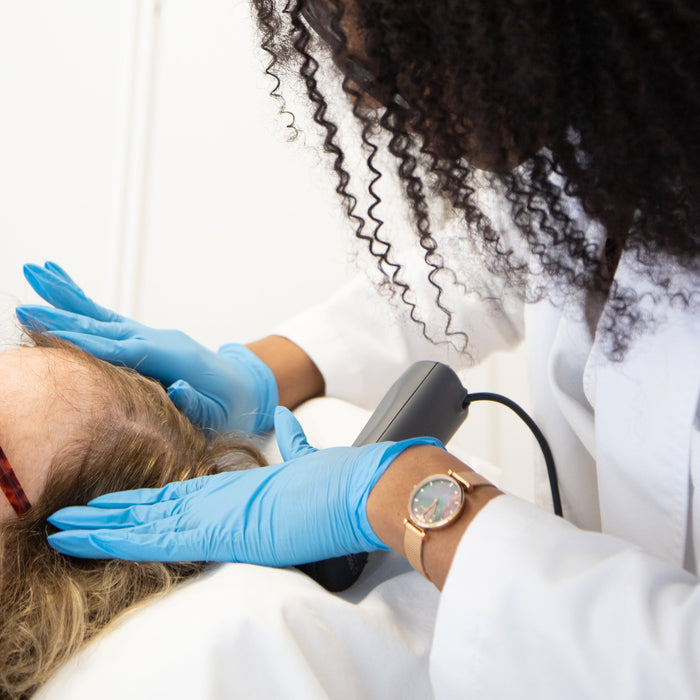
During a trichology consultation, I use a specialized magnifying instrument called a trichoscope to observe the scalp more closely. The appearance of scales, the presence of buildup, and visible irritation can provide useful information.


Some common observations include:
| What you see | What it can indicate |
|---|---|
| Yellow, greasy scales | Sometimes seen with oily scalp conditions, including seborrheic dermatitis |
| White flakes | Can appear with dandruff, dryness, or accumulated product residue |
| Thick, silvery scales | Can occur with inflammatory conditions such as psoriasis |
These visual characteristics are clues rather than a medical diagnosis. My role as a trichologist is to assess visible scalp characteristics, explore hair-care habits, provide scalp-care education, and recognize when a client would benefit from medical evaluation.
To go further, explore our dandruff and scalp care products.
A real client story: severe flaking beneath braids
I'm currently working with a client who has experienced significant scalp flaking for many years. His scaling was so pronounced that thick yellowish flakes were clearly visible through his braids.
One of the challenges we identified during our consultations was his cleansing routine. Because he preferred wearing his hair in braids, he typically washed his scalp only once every two to three weeks. This made managing the accumulated residue particularly challenging, especially while wearing a style that limited convenient access to the scalp.


Through regular scalp-care sessions and adjustments to his maintenance routine, we've observed noticeable improvements in the amount of visible flaking. We're now focusing on helping him establish a more consistent cleansing routine that accommodates his lifestyle.
His experience illustrates something I regularly share with clients:
Your hairstyle should work with your scalp health, not against it.
Protective hairstyles can be beneficial for reducing daily manipulation of textured hair, but they shouldn't prevent adequate scalp maintenance.
Four common habits that can make scalp discomfort worse

1. Applying more oil without understanding the flaking.
Many people assume that flakes mean dryness. They respond by repeatedly applying oil, even when the scalp already has considerable sebum or product buildup. Oil can have a place in hair care, but it isn't appropriate for every scalp concern.
2. Prioritizing moisture over cleansing.
Keeping curly and coily hair moisturized is important. However, I frequently encounter clients who focus so heavily on moisturizing products that effective scalp cleansing becomes secondary. A balanced routine should consider both the needs of the scalp and the condition of the hair strands (dry or dehydrated hair?).
3. Scratching or scraping away flakes.
Using fingernails, combs, or other tools to remove scales can irritate the scalp and damage the skin's surface. Persistent scaling is better addressed by understanding its cause than by repeatedly scraping away what is visible.
4. Keeping protective styles too long.
Braids, wigs, and extensions can sometimes make cleansing more challenging. Certain installation techniques, styling products, or extension materials may also contribute to irritation in sensitive individuals. I encourage clients to consider their scalp's needs when deciding how long to maintain a hairstyle.
How often should you wash an itchy, flaky scalp?
There's no universal washing schedule that works for everyone. Hair texture, styling habits, scalp condition, and product use all play a role.

In my practice, I often discuss weekly cleansing as a practical starting point for clients with textured hair who struggle with recurring buildup. Some individuals may benefit from more frequent cleansing, while others require a different approach based on their hair and scalp needs.
For clients with substantial buildup, we sometimes begin with a more intensive scalp-care routine before transitioning toward a sustainable maintenance schedule. This approach focuses on consistency rather than occasional, aggressive cleansing. To get started, see how to build a hair-care routine or browse our hair-care routines.
When a diagnosed medical scalp condition is involved, any specific medicated washing schedule should follow guidance from the appropriate healthcare professional.
What happens during a professional scalp detox?
At Sanctuaire Capillaire, our Signature Scalp Detox is a cosmetic scalp-care service focused on thorough cleansing, exfoliation, and removing accumulated residue.


Depending on the scalp's condition and suitability, the experience may include:
- exfoliation with alpha hydroxy acids (AHAs);
- gentle mechanical exfoliation;
- thorough shampooing and cleansing;
- a hydrosonic spatula to help remove loosened surface debris;
- a clay-based mask;
- soothing scalp-care products.
The goal is to leave the scalp feeling thoroughly cleansed and refreshed while supporting better scalp-care habits at home. For a more relaxing experience, our Japanese Head Spa pairs this kind of cleansing with a Japanese scalp ritual.
Not every scalp is suitable for exfoliation, particularly when significant irritation, open sores, or other concerning symptoms are present. Our cosmetic scalp-care services are not substitutes for medical diagnosis or treatment of conditions such as seborrheic dermatitis, psoriasis, or infections.
Can scalp problems be associated with hair loss?
Scalp health and hair health are closely connected, although the relationship isn't always straightforward.


In my experience, some clients experiencing persistent flaking and itching also report concerns about shedding, breakage, or thinning. This doesn't necessarily mean the flaking is causing their hair loss. Certain inflammatory scalp disorders can be associated with hair shedding, while scratching and styling practices may contribute to breakage.
During consultations, I consider these concerns together and recommend medical evaluation when symptoms suggest an underlying condition that requires investigation. If shedding worries you, our hair loss care can complement your routine.
I've also observed that hair can appear fuller immediately after removing significant buildup. This is a cosmetic change in appearance, not evidence of new hair growth.
Does diet or gut health affect your scalp?
As a Certified Naturotherapist, I take an interest in the broader lifestyle factors that may influence skin and hair wellness. During consultations, I discuss nutrition, stress, sleep, and daily habits to better understand each client's overall routine.
One thing I frequently remind clients is that your scalp is skin, just like your face. The difference is that it's covered by hair, making changes harder to notice.

Research continues to explore associations between the gut microbiome, inflammation, and skin health. However, a direct causal relationship between gut imbalance and common scalp-flaking conditions has not been established.
I encourage clients to observe their individual lifestyle patterns while avoiding unnecessary dietary restrictions or assuming that a particular food is responsible for their symptoms.
When should you seek professional help?
Occasional mild flaking may be manageable with appropriate routine scalp care. However, ongoing symptoms deserve attention, particularly when they begin interfering with everyday comfort.

Consider consulting a physician or dermatologist if you're experiencing:
- persistent or worsening itching;
- recurring or unusually thick scales;
- pain, sores, bleeding, or significant redness;
- noticeable hair thinning or patchy hair loss;
- symptoms that don't improve with ordinary scalp care.
Sudden hair loss, painful swelling, or signs of infection warrant prompt medical attention. In Québec, a nurse at Info-Santé 811 can guide you if you're unsure.
A trichology consultation can complement this process by helping you better understand your scalp-care practices, identify visible concerns, and develop suitable cosmetic maintenance habits. Medical conditions require diagnosis and treatment by appropriately licensed healthcare professionals.
Sanctuaire Capillaire: how our clinic can help
Sanctuaire Capillaire CRÜE is the trichology clinic I founded in Montréal. People come to us for a simple reason: to understand what is happening on their scalp, and to leave with a clear plan rather than one more product to try.
Every client follows the same approach: we observe, look for the likely cause, then suggest the treatments and routine that suit you. When your symptoms call for a medical opinion, I tell you and refer you.


These are the services that most often help people with an itchy, flaky scalp:
Insurance receipts available for some servicesPay in instalments
My three most important tips for better scalp care
After years of working with clients experiencing scalp concerns, three principles consistently stand out.

1. Don't normalize persistent itching.
Occasional itching can happen, but recurring discomfort shouldn't simply become part of your everyday routine. Pay attention to changes and seek appropriate professional guidance when symptoms persist.
2. Prioritize cleansing as much as moisturizing.
Your hair needs conditioning, but your scalp also needs effective cleansing. Choose products appropriate for your hair and scalp (our online hair diagnosis can help), and maintain a routine that balances both.
3. Never prioritize your hairstyle over your scalp health.
Braids, wigs, and protective hairstyles shouldn't prevent you from maintaining a clean, comfortable scalp. If your current hairstyle makes routine scalp care difficult, consider adjusting your maintenance schedule or seeking professional assistance.
Final thoughts: healthy hair care begins with scalp awareness

One of the most important things I've learned through my work as a trichologist is that people often pay more attention to the appearance of their hair than to the skin beneath it. Yet our scalp deserves the same care and attention we give our face.
If you're constantly noticing flakes, experiencing discomfort, or struggling with recurring buildup, consider whether your current hair-care routine is truly meeting your scalp's needs. Sometimes small adjustments to cleansing habits can make a meaningful difference in comfort and appearance. Other concerns require evaluation by a healthcare professional.
At Sanctuaire Capillaire in Montréal, we offer personalized trichology consultations and scalp-care services to help clients better understand their hair and scalp-care needs.
Because beautiful hair should never come at the expense of a comfortable, well-cared-for scalp.
Frequently asked questions
Why is my scalp so itchy and flaky?
The most common causes are seborrheic dermatitis, a buildup of products and sebum, infrequent cleansing, or a condition such as psoriasis or eczema. The appearance of the flakes offers clues, but only a healthcare professional can make a diagnosis.
Should I put oil on a flaky scalp?
Not necessarily. A flaky scalp isn't always dry: if it's already oily, oil can add to the buildup and make the discomfort worse.
How often should I wash an itchy, flaky scalp?
There's no single rule. For textured hair prone to buildup, weekly cleansing is a practical starting point, adjusted to your scalp and your hairstyles.
Can an itchy scalp cause hair loss?
Flakes don't directly cause shedding, but some inflammatory scalp conditions can be associated with hair loss, and scratching can contribute to breakage. See a professional if you notice thinning or patches.
Are the clinic's services covered by insurance?
Insurance receipts are available for some services at Sanctuaire Capillaire. Check your coverage with your insurer. Payment in instalments is also available.
Disclaimer: This article is provided for general educational and informational purposes only. It reflects professional observations and scalp-care experience and does not constitute medical advice, diagnosis, or treatment. Trichology consultations and cosmetic scalp-care services do not replace assessment or care by a physician or dermatologist. If you have persistent, worsening, or concerning symptoms, please consult an appropriately licensed healthcare professional.