Batana oil 8 min read
Batana oil benefits: 7 ways it helps hair, skin and beards, according to a trichologist
A certified trichologist explains the 7 real benefits of batana oil for hair, skin and beards, what the science says, and why it won't regrow hair on its own.


Batana oil has become one of the most popular natural ingredients in hair care. On social media, it's credited with all kinds of powers: thicker hair, faster growth, filled-in bald spots and repaired damaged hair. But what are the real batana oil benefits? And above all, what does the science say?
At Crüe Cosmetics, we use batana oil in our Shebä moisturizing line for its nourishing properties.
As a certified trichologist, I believe in the benefits of plant oils, but I think it's important to separate cosmetic results from therapeutic effects.

Here are seven potential batana oil benefits, its limits and my recommendations for getting the most out of it.
Why is batana oil interesting?
Batana oil comes from the American oil palm, Elaeis oleifera, found mainly in Central America and associated with the hair care traditions of the Miskito communities of Honduras. To learn all about its origins and how to use it, read our complete guide to batana oil for hair.
Its composition includes several substances of interest for cosmetic care.
These components explain why batana oil can be useful in moisturizing and nourishing care. However, the presence of an active ingredient doesn't automatically mean a product has all the therapeutic properties associated with that molecule.
What are the 7 benefits of batana oil?


1. Nourishes dry hair
One of the main batana oil benefits is its emollient power. It forms a protective film on the hair fibre, which can reduce moisture loss and make hair feel softer. It's especially useful for hair that has become rough, dry or dehydrated, or hard to style.
2. Helps reduce breakage
This is a benefit I consider particularly important. When hair lacks suppleness, it becomes more vulnerable to friction, detangling and everyday handling. Plant oils can help reduce friction between hair fibres. By improving their suppleness, they can help limit some breakage.
3. Supports length retention
There's a fundamental difference between hair growth and length retention. Growth happens at the hair follicle, in the scalp. Length retention depends on our ability to preserve the hair we've already grown.
Imagine hair that grows steadily, but whose ends keep breaking off. That person may feel like their hair never grows. By reducing breakage and split ends, a nourishing treatment can help preserve more length.
Hair that breaks less can get longer, without necessarily growing any faster.
4. Improves shine and softness
Batana oil can help temporarily smooth the surface of the hair. This improves light reflection and gives hair a shinier appearance. It can also make styling easier and leave hair feeling nicer to the touch.
5. Helps soothe a dry scalp
A dry scalp can sometimes benefit from an emollient treatment that limits water loss. However, it's important to distinguish dry skin from a condition like seborrheic dermatitis.
In consultation, I regularly meet people who interpret any itching as a lack of moisture. Yet some inflammatory or infectious conditions call for a completely different approach. A nourishing oil is not a proven treatment for fungal or bacterial infections, or for alopecia.
6. Softens the beard
The emollient properties of batana oil can also be useful for beard hair. A few drops applied to the lengths can help reduce dryness, soften the hair and make it easier to groom. However, there's no evidence that batana oil stimulates the growth of new hair or fills in a patchy beard. Our products are also suitable for men, by the way: are Crüe products right for men?
7. Nourishes patches of dry skin

Batana oil can also be used as a cosmetic treatment on dry areas of the body. Its fatty acids help form a protective film that limits moisture loss. It can be useful for hands, elbows or other areas with mild dryness. On the other hand, its rich texture may be less suitable for oily or acne-prone skin.
What does the science really say about batana oil?
This is probably the most important question.

Research on plant oils shows that their fatty acids can have useful properties for skin and hair. For example, a 2003 study showed that coconut oil reduced protein loss in hair. But we need to distinguish between three levels of scientific evidence.
To date, there aren't enough clinical trials showing that batana oil directly promotes hair regrowth.
So we can talk about its emollient properties and potential cosmetic benefits, without claiming it's a proven treatment for alopecia. That distinction is essential when you want to make an informed choice about your hair care.
What are the pros and cons of batana oil?
| Pros | Cons |
|---|---|
| Plant-based | Its rich texture can weigh down fine hair |
| Improves hair softness and suppleness | Can make hair look greasier |
| Can limit friction and breakage | Can cause irritation or allergic reactions |
| Helps preserve length | Not suitable for every scalp condition |
| Easy to add to masks and conditioners | Quality varies between products on the market |
| Also softens the beard and dry skin | Its effectiveness against alopecia hasn't been proven |
In my opinion, the main drawback isn't the oil itself, but the unrealistic expectations some advertising can create.
Can batana oil have side effects?
Yes. Natural doesn't necessarily mean risk-free.
Some people may experience redness, itching or irritation after applying it. Using too much can also leave residue, weigh hair down or make certain issues worse for people with a very oily scalp.
I always recommend starting with a patch test on a small area of healthy skin. It's also best to avoid applying it to a scalp with lesions, an infection or significant inflammation without professional advice.
Finally, be careful with homemade recipes that contain several essential oils. Rosemary, peppermint, eucalyptus or tea tree can cause irritation when used at inappropriate concentrations.
How long does it take to see results with batana oil?
It all depends on the result you're looking for.
For softness and shine. These cosmetic effects can be noticeable from the very first use. After a treatment, hair may feel softer, more supple and easier to detangle.
To reduce breakage. You generally need to watch how your hair changes over several weeks. Regular, appropriate use can help improve manageability and limit some breakage. That said, there's no scientifically established timeline for batana oil.
For longer hair. Length retention takes more patience. You need to give your hair time to grow naturally while protecting the length you already have.
For hair regrowth. No reliable timeline can be given. There's currently no clinical evidence that applying batana oil for 30, 60 or 90 days leads to regrowth. So be wary of dramatic transformations presented as guaranteed results.
How to get the most out of batana oil benefits
I recommend adapting how you use it to your hair's needs.

For fine hair, a pre-shampoo mask is often the better choice to avoid weighing it down. For thick, wavy, curly or coily hair, small amounts can be applied to the lengths and ends to improve suppleness. You can also add a few drops to a portion of conditioner just before applying it. Here's also how to do a hair oil treatment.
In every case, start with a small amount and adjust based on the results. Leaving it on longer isn't necessarily more effective.
My take as a trichologist: should you try batana oil?

I see batana oil as an interesting cosmetic ingredient, especially for people who want to nourish their hair and improve length retention. But I would never present it as a universal solution for hair loss.
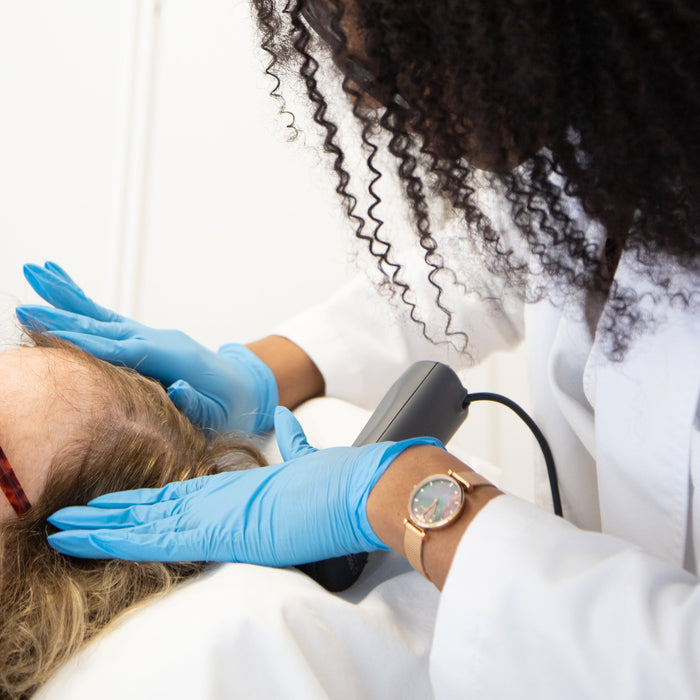
When someone notices reduced density, thinning temples or persistent shedding, my priority is to understand what's happening at the level of the scalp and follicles. There are several forms of alopecia, and each may call for a different approach. Following a social media trend doesn't replace that process: that's the whole point of seeing a trichologist.
At Crüe Cosmetics, we added batana to our Shebä moisturizing line for its nourishing qualities, in formulas designed to care for your hair.
Use batana oil for what it can genuinely offer, without giving it powers it hasn't yet proven.
Because when it comes to hair health, understanding your needs always matters more than following the latest trend.
Frequently asked questions
What are the benefits of batana oil?
It nourishes dry hair, helps reduce breakage and retain length, improves shine and softness, and can soften the beard or patches of dry skin.
Is batana oil good for the scalp?
It can make a dry scalp more comfortable, but it isn't suitable for every condition. If you have itching, dandruff or inflammation, identify the cause first.
Does batana oil have side effects?
It can cause redness, itching or irritation in some people, and weigh down fine or oily hair. Always do a patch test before the first use.
How long does batana oil take to work?
Softness and shine show from the very first use. For breakage, allow several weeks. No reliable timeline can be given for regrowth.
Does batana oil make a beard grow?
No, there's no evidence of that. It can, however, soften the hair and reduce the feeling of dryness.
Disclaimer: This article is provided for educational and informational purposes only. It does not constitute medical advice, diagnosis, or treatment. For persistent hair loss or concerning symptoms, consult a healthcare professional.