Batana oil 10 min read
Batana oil for hair: benefits, growth, how to use it and a trichologist's advice
Batana oil nourishes dry, curly and coily hair and helps reduce breakage, but it doesn't treat alopecia. A trichologist explains what it can really do, how to use it and how to spot the real thing.


Batana oil is getting a lot of attention on social media. Presented as a miracle ingredient for growing hair, restoring thinning edges and fighting alopecia, it sparks as much curiosity as hope. But what can batana oil really do for your hair?
At Crüe Cosmetics, we added batana oil to our Shebä moisturizing line long before it became a viral trend.
As a certified trichologist, I deeply believe in the benefits of natural ingredients. However, it's essential to distinguish their cosmetic properties from genuine hair loss treatments.

Let's look together at the benefits of batana oil, how to use it properly and what science tells us about its effectiveness for hair growth.
What is batana oil and where does it come from?
Batana oil is a plant oil extracted from the American oil palm, Elaeis oleifera, native to Central and South America.
It is especially associated with the Indigenous Miskito communities of Honduras, who have traditionally used it to nourish, protect and care for their hair.
Traditional batana oil has a dark brown colour, a distinctive roasted-nut scent and a fairly thick consistency that can become almost solid when the temperature drops.
Its composition includes fatty acids, notably oleic and linoleic acids, as well as antioxidant compounds. These characteristics explain its appeal as a nourishing ingredient in hair care. To learn more, discover the plant oils we use in our formulas.
What are the benefits of batana oil for hair?


1. Nourishing dry hair and improving its softness.
Batana oil has emollient properties that help soften the hair fibre and limit moisture loss. It can be especially useful for dry hair, as well as curly, kinky and coily hair, which often need more nourishing care.
2. Reducing breakage and supporting length retention.
This is probably one of its most interesting advantages. Plant oils can help lubricate the hair fibre, reduce friction and make hair more supple. Less fragile hair is less likely to suffer breakage during styling.
3. Improving shine and the look of your hair.
By coating the hair fibre with a light protective film, batana oil can help improve shine, softness and manageability. That makes it a worthwhile ingredient for dull, rough or hard-to-detangle hair.
4. Supporting scalp comfort.
Some compounds found in plant oils are being studied for their antioxidant or antimicrobial properties. However, there isn't enough clinical evidence to show that batana oil treats bacterial or fungal scalp infections. If you're dealing with persistent itching, heavy dandruff or inflammation, it's best to identify the cause before applying oils.
Reducing breakage isn't the same as stimulating growth.
Hair grows from the follicles in your scalp. When you protect your ends, you don't necessarily make your hair grow faster, but you preserve more of the length it has already produced. This is what we call length retention.
Does batana oil really make hair grow?
This is the question I'm asked most often.
My answer is nuanced: batana oil can help your hair look visibly longer by reducing breakage, but its ability to directly stimulate regrowth hasn't been demonstrated in humans.
It's important to understand the difference between hair that holds on to its length better and follicles that produce more hair. Dry, weakened hair can break almost as fast as it grows. In that context, a nourishing treatment can considerably improve the look and length of your hair. But that doesn't mean the oil speeds up the natural growth cycle.
In trichology, we always try to understand why hair isn't growing as expected, why it's breaking or why its density is decreasing. These situations can have very different causes.
Can batana oil treat alopecia?
Alopecia refers to different types of hair loss, whose causes and treatments vary considerably. It can be linked to hormonal, autoimmune, inflammatory, nutritional or mechanical factors, among others.

When you notice a loss of density, it's easy to be tempted by an ingredient that's popular on social media. But without knowing the real cause of the hair loss, it's hard to choose a suitable solution.
Batana oil is not a proven treatment for alopecia. It can be part of a care routine aimed at protecting your lengths, but it doesn't replace a professional assessment.
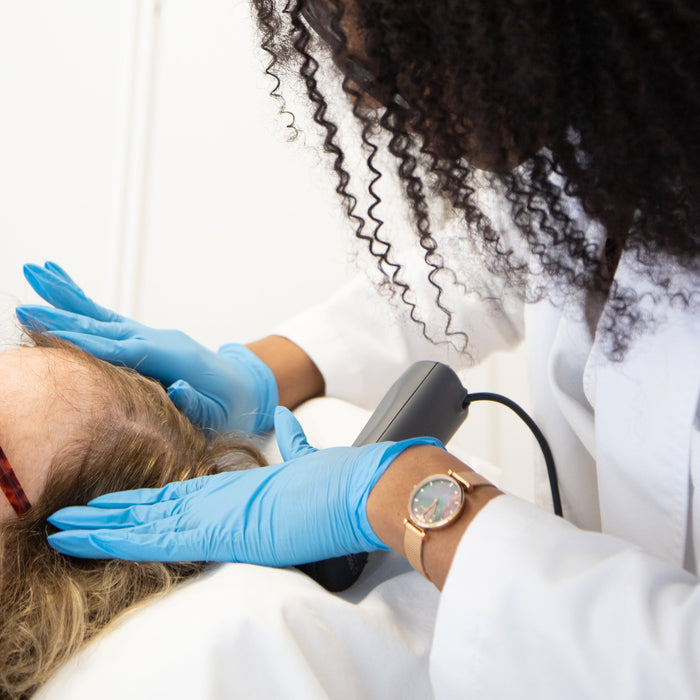
If you notice thinning edges, bald patches or a gradual decrease in your hair density, I recommend seeing a trichologist rather than piling on home treatments. The earlier some forms of alopecia are addressed, the better the chances of preserving the follicles.
How to use batana oil properly
One of the most common mistakes is applying the same amount of oil to every hair type. The needs of fine, oily hair are very different from those of thick, coily hair. Not sure of your type? Here's how to find out your hair type.

As a pre-shampoo oil treatment
For fine hair or hair that's easily weighed down, I prefer using it as a pre-wash treatment. Apply a small amount to your lengths and ends, leave it on for about 20 to 30 minutes, then shampoo. You can start with once a week and adjust depending on how your hair responds. Learn all about hot oil treatments.
These times are practical tips, not protocols validated by clinical trials on batana.
In a conditioner or mask
You can add a few drops of batana oil to a portion of conditioner or mask, in your hand, just before applying it. This lets you enrich your treatment from time to time without changing the whole product in its container.
On thick, kinky or coily hair
Denser hair and textures that tend to be dry can benefit from a slightly more generous application on the lengths. A small amount can also be used to keep your ends supple between washes. However, hair texture alone doesn't determine how well your scalp tolerates oils.
Can you leave batana oil in overnight?
Some people can, especially on the lengths, but it isn't necessary. I generally recommend starting with a short application time, then adjusting based on tolerance. If your scalp is oily, sensitive or prone to seborrheic dermatitis, avoid prolonged applications directly on the skin.
How to tell if batana oil is the real thing
With this ingredient's popularity, diluted or mislabelled products can be hard to tell apart from authentic oils.
A recognized organic certification can be a good sign of regulated practices, but on its own it doesn't guarantee an oil's purity or authenticity. Likewise, a lighter colour doesn't necessarily prove it's a counterfeit: some oils are refined or processed differently.
Batana oil or rosemary oil: which one should you choose?
First, it's important to understand that these two ingredients are very different. Batana oil is a plant oil, while rosemary can be used as an essential oil, a hydrosol or an infusion in a carrier oil. Many products sold as "rosemary oil" are actually blends whose composition and concentration vary.
To nourish your lengths and improve their softness, I would choose batana oil. For hair growth, the scientific picture is different.
A clinical study published in 2015 evaluated a rosemary preparation in people with androgenetic alopecia. The results were encouraging, but the data remain limited and can't be generalized to all commercial preparations.
So far, rosemary oil has more preliminary clinical data on hair growth than batana oil. The choice depends above all on your needs, and neither one replaces appropriate treatment for diagnosed alopecia. Learn more in our guide to rosemary oil for hair.
Can you combine batana oil with essential oils?
Batana oil can serve as a base for some preparations containing essential oils, such as rosemary, peppermint or tea tree. These ingredients are being studied for various biological properties, but their effectiveness against scalp infections or alopecia hasn't been established for every use.
Essential oils are highly concentrated and can cause irritation or allergic reactions. They must be properly diluted, and some situations call for extra precautions. I recommend consulting a qualified professional before creating a blend for your scalp, especially if you have a skin condition. To go further: which oil to choose for hair growth.
My three tips as a trichologist before using batana oil
1. Choose your oil carefully.
Go for reliable suppliers, transparent ingredient lists and products whose origin can be verified.
2. Do a patch test.
Before using it for the first time, apply a small amount to a small area of healthy skin and watch for any reaction. A reaction can also appear later.
3. Don't leave the oil on longer than you need to.
Start with a pre-wash treatment and adjust the frequency to your real needs.
What works for someone on social media doesn't necessarily match your own hair reality.
Discover batana oil in our Shebä line
At Crüe Cosmetics, we chose to include batana oil in our Shebä moisturizing line for its nourishing qualities and its value in care for dry hair.


Our Shebä shampoo and conditioner combine this ingredient with a formula designed to cleanse, soften and make hair easier to manage. You get the cosmetic benefits of batana in a simple hair routine, without having to apply a pure oil directly to your scalp. Also discover the 7 benefits of batana oil for hair, skin and beard.
Batana oil isn't a miracle cure for hair loss, but it can be an excellent ally for keeping your hair supple, shiny and less prone to breakage.
The key isn't following every trend, but understanding what your hair and scalp really need. And if your main concern is a loss of density or alopecia, a trichology consultation can help you better understand the possible causes and the right next steps.
Frequently asked questions
What is batana oil?
It's a plant oil extracted from the nuts of the American oil palm, Elaeis oleifera, traditionally used by the Miskito communities of Honduras to nourish and protect their hair.
Does batana oil really make hair grow?
Above all, it helps reduce breakage, which lets you keep more length. Its direct effect on regrowth hasn't been demonstrated in humans.
How do you use batana oil on hair?
As a pre-shampoo oil treatment on the lengths, 20 to 30 minutes before shampooing, once a week to start. Adjust based on your hair texture and how your scalp responds.
Can you leave batana oil in overnight?
It's possible on the lengths, but not necessary. Avoid long applications on an oily or sensitive scalp, or one prone to seborrheic dermatitis.
How can you tell if batana oil is real?
Check the ingredients (Elaeis Oleifera Kernel Oil), the origin, the dark brown colour, the thick texture and the roasted-nut scent, and choose a transparent supplier.
Batana oil or rosemary oil: which one should you choose?
Batana to nourish your lengths and limit breakage, rosemary for its still-limited potential for growth. Neither one replaces appropriate treatment for diagnosed alopecia.
Disclaimer: This article is provided for educational and informational purposes only. It does not constitute medical advice, diagnosis or treatment. For persistent hair loss or worrying scalp symptoms, consult a healthcare professional.